

Separate rooms, the same mediator, the same outcome. How it works and when to ask for it.
What it is

You are in one room, your ex-partner is in another, and the mediator moves between you. You do not see each other, and where arrival times are staggered you need not encounter each other at all. Everything else about the process is the same: the same accreditation, the same confidentiality, the same memorandum at the end.
It is used far more often than people expect. If the thought of sitting across a table from your ex-partner is the reason you have not booked, this is the answer to that, and asking for it does not need to be justified.
When it is the right choice

Where being in the same room would prevent you speaking freely. Where one of you tends to dominate the conversation and the other stops contributing. Where a previous attempt at direct conversation ended badly. Where seeing each other is simply too raw at this stage, which is a legitimate reason and a common one.
It is also used where a case has been assessed as suitable for mediation but with reservations, and the separation of rooms is what makes it workable.
What it costs in efficiency

Time. A point that takes two minutes to resolve when both people hear it at once takes longer when it is carried in one direction, considered, and carried back. Most shuttle cases run about one session longer than the equivalent joint case.
Some nuance is also lost. A mediator relaying a proposal conveys the substance accurately and cannot convey a hesitation, or the moment where one party visibly softened. Occasionally that matters. Set against not mediating at all, it is a small price.
What you gain

People say things in shuttle they would not say in a joint room. The absence of an audience changes what can be admitted, including uncertainty, and uncertainty is frequently where an agreement becomes possible. A party who would never concede a point in front of their ex-partner will often explore it with a mediator alone.
Online shuttle
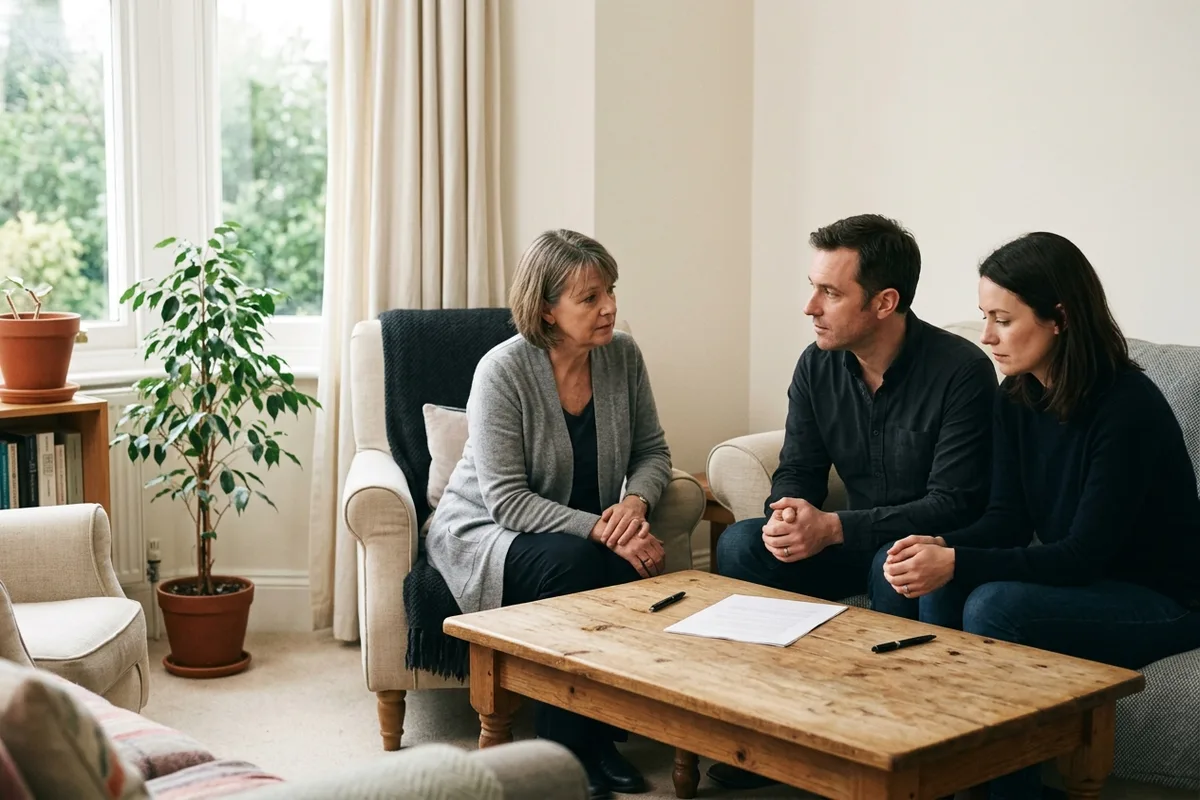
Video mediation makes shuttle straightforward. The mediator moves between two calls or uses breakout rooms, and neither party sees the other at any point. For many families this is now the default, because it removes travel, the shared waiting room and the car park entirely.
What it does not do
It does not make mediation appropriate where it is not. Where there has been domestic abuse, the question is whether mediation should happen at all, and separate rooms do not answer that. A power imbalance that would make an agreement unsafe is not fixed by a wall.
The MIAM assessment is where this is decided, and a mediator who offers shuttle as a way around a safeguarding concern is doing the wrong thing. Shuttle is for discomfort and for difficulty. It is not a substitute for a proper assessment.
How to ask
Say it at the MIAM, or at the enquiry before it. You do not need to explain, and you will not be asked to persuade anyone. The mediator will arrange rooms, arrival times and, where needed, separate exits.
How the room is arranged
Two rooms, each with its own entrance where the building allows it, and arrival times staggered so you do not meet in a corridor or a car park. The mediator moves between them. You do not see each other at any point, including at the end.
Where this is done remotely, each of you is in a separate video call and the mediator moves between them, or uses breakout rooms with the joint room never used. The same principle applies: there is no moment where both of you are present.
Say at the MIAM if arrival and departure are a concern, and the practical arrangements will be made before the day rather than improvised on it.
What the mediator carries, and what they do not
The mediator carries positions, reasons and questions. They do not carry tone, and this is the single most useful thing about the format.
A proposal made angrily in one room arrives in the other as a proposal. The frustration attached to it does not travel. Couples who cannot exchange three messages without it escalating find they can exchange proposals all afternoon this way.
The mediator will also check before conveying anything. If you say something you do not want passed on, say so, and it is not passed on. That control matters, and it is worth using deliberately rather than assuming everything said is being relayed.
It takes longer, and why
Each exchange requires the mediator to hear it, walk it next door, deliver it, hear the response and walk it back. What takes two minutes across a table takes ten this way.
Sessions are therefore usually longer, commonly two to three hours rather than ninety minutes, and a case generally needs more of them. Expect the process to cost somewhat more than joint sessions would.
That is a real cost and it is worth setting against the alternative honestly. It remains a fraction of contested proceedings, and it is the difference between reaching an agreement and not.
When it is the right format
Where there has been abuse and a mediator has assessed that mediation can still proceed safely. This assessment is done carefully and shuttle is not a way around a safeguarding conclusion. Where it does proceed, the format removes the direct contact that would make joint sessions unsafe.
Where one person is so distressed by the other's presence that they cannot think. Being unable to hold a thought while the other person is in the room is not a character flaw and it is a genuine reason.
Where the pattern between you is that every conversation escalates within minutes, regardless of subject. Shuttle interrupts that pattern mechanically.
Where one party has a substantially stronger negotiating position or manner, and joint sessions would simply reproduce it. The mediator can slow the exchange down and make sure each proposal is understood before it is answered.
When it is not
Where a mediator's safeguarding assessment concludes mediation should not proceed at all. Shuttle is a format, not a workaround, and no format makes an unsafe process safe.
Where the two of you simply find joint sessions uncomfortable. Uncomfortable is ordinary, and the discomfort usually eases after the first session. Choosing shuttle to avoid it costs money and slows things down without addressing anything.
Moving between formats
It is not a permanent choice. A significant number of cases start in shuttle and move to joint sessions once some agreement has been reached and the temperature has dropped. Others start joint, encounter a difficult subject, and use shuttle for that subject alone.
The reverse also happens, and the mediator can end a joint session and split the rooms in the moment if it is going badly. That is not a failure and it does not mean the mediation has broken down.
What it does not change
The disclosure obligations are identical. The same documents, the same duty of full and frank disclosure, the same consequences for not meeting it.
The confidentiality is identical. Discussions remain privileged, financial disclosure remains open.
The outcome documents are identical. A memorandum of understanding, an open financial statement where the case is financial, and the same route to a consent order.
And the agreement carries exactly the same weight. Nothing about the format makes the result less solid.
Preparing for a shuttle session
Bring more than you would to a joint session. There is waiting involved while the mediator is next door, sometimes fifteen or twenty minutes at a time, and it is more comfortable with something to do.
Bring your documents in order. Time spent looking for a statement is time the mediator spends waiting.
Think about your priorities before you arrive. In a joint session you hear the other person's reasoning as they give it. In shuttle you hear a summary, so knowing in advance which two or three things matter most to you makes the exchange more efficient.
And take a support person if it helps. They will not be in the session but they can be in the building, and for a lot of people that alone makes the day manageable.
What it costs against what it achieves
Longer sessions and usually more of them, so expect the total to run somewhat above joint mediation. The honest comparison is not against joint sessions, which were not available to you, but against the alternative of proceedings, and against that the difference remains substantial.
It also achieves something proceedings do not. Two people who reach an agreement through shuttle mediation have still reached their own agreement, and the arrangements that follow tend to hold better than arrangements imposed on them.
Asking for it
You do not need a reason you are willing to explain in detail. Say at the MIAM that you would prefer not to be in the same room, and the mediator will arrange it. They will ask some questions, because the format has to fit the circumstances, and you are not required to justify the preference itself.
If you are unsure, say that too. A mediator can start in shuttle and review it after the first session, which costs nothing and removes the need to decide in advance.
What the outcome looks like
Exactly the same as any other mediation. A memorandum of understanding setting out what has been agreed, an open financial statement where the case is financial, and the route to a consent order that makes it binding.
Nothing in the documents records that the sessions were conducted in separate rooms, and nothing about the format gives the resulting agreement less standing. A court approving the consent order is looking at the terms and the disclosure behind them, not at the seating arrangements that produced them.
How Mediation Direct can help in Hartlepool
A structured, confidential process helping separating couples reach lasting agreements on living arrangements and family finances.
Frequently Asked Questions About Our Services in Hartlepool
Will my ex-partner know I asked for shuttle?
They will know the sessions are being held in separate rooms, because they will be in one. Mediators generally present it as the format for the case rather than as one party's request.
Does shuttle mediation cost more?
The per-session rate is the same. Cases typically run about one session longer, so the total is modestly higher.
Is the agreement as strong?
Yes. The memorandum of understanding and any consent order are identical in form and effect.
Can we start joint and switch?
Yes, and it happens. If a joint session becomes unproductive the mediator can move to shuttle, sometimes within the same session.
Can we start shuttle and move to joint?
Also yes, and it is a good sign when it happens. Some couples find that after two shuttle sessions the temperature has dropped enough.
Does shuttle work online?
It works particularly well online, using separate calls or breakout rooms. Neither party sees the other at any point.
Will I have to wait in a waiting room with them?
No. Arrival times are staggered and separate waiting areas are used. Tell the service if you need a separate exit as well.
Is shuttle used where there has been abuse?
It is not a substitute for the safeguarding assessment. Where mediation is not appropriate, separate rooms do not make it appropriate.
How long is a shuttle session?
Usually a little longer than ninety minutes, because the mediator is moving between rooms.
Does the mediator repeat exactly what I said?
They convey the substance and check with you first what may be passed on. Nothing you ask to be kept back is carried across.
About the author

Authored and reviewed by Family Mediation Council (FMC) accredited family mediators. Every procedural timeline and statutory requirement is verified against the Family Procedure Rules 2010 Part 3 and current Ministry of Justice standards.
- FMC Accredited
- Standards Board Registered
- Authorised MIAM Provider
- MoJ Voucher Scheme
Talk to someone who knows Hartlepool
No obligation, and nothing is decided on the call. We will talk through where you are and what your options actually are.